


If you’ve been following DC’s economic recovery efforts post-pandemic, you’re likely aware of the focus on downtown. Last week, Mayor Muriel Bowser convened a summit on the future of downtown, focused on the emergence of new mixed-use neighborhoods and economic development initiatives.
This conversation continued several recent planning efforts to support downtown revitalization, like the Downtown Action Plan and Downtown Public Realm Plan. The District has made significant investments to make these plans a reality, such as the $21 million transformation of Franklin Park and $515 million to support Capitol One Arena renovations. In 2024, the Office of the Deputy Mayor for Planning and Economic Development launched the Housing in Downtown tax abatement, which has delivered 157 new homes downtown with nearly 3,900 more in the pipeline. Between 2022 and 2025, the Office of Planning awarded $6.8 million in grants to Business Improvement Districts for infrastructure and events in public spaces downtown. Over 150 events supported by this grant funding attracted 140,000 people downtown. These are just a few examples of how the District is promoting downtown’s recovery.
Downtown is Changing
DC has one of the most office-centric downtowns of any metro area in the country. While about 20% to 30% of downtown space in many major US cities is residential, downtown DC has historically had very few homes.
That is beginning to change. Between 2006 and 2026, the share of residential land downtown increased from 3% to 8%. Today, 26,000 people live in downtown DC, with many more to come as planned housing projects move through the development pipeline.
At the same time, DC’s need for office space is decreasing. As of 2026, 22 million square feet (21%) of office space downtown is vacant. This vacancy decreases foot traffic, which in turn impacts downtown’s retail and restaurants. Employers today use about half the amount of workspace per employee compared to 25 years ago. The federal government has disposed of several large office buildings and announced plans to vacate more, which together encompass millions of square feet of space.
These shifts give us the opportunity to rethink the role of downtown in our city.
A Place to Work and a Place to Live
Downtown already has many of the things that make a great neighborhood. No part of the District has more jobs or is better served by transit than downtown, so it is uniquely positioned to evolve from an office dominant environment into mixed use neighborhoods with new homes, offices, retail, cultural destinations, and entertainment.
Even with the changing demand for office space, downtown will continue to have the highest concentration of jobs in the District. Today, about 57% of all commercial building space is located in downtown. In the years ahead, downtown’s central location in the region and Metro Rail system will continue to make it the most desirable location for offices, hotels, and entertainment. Adding more housing downtown increases pedestrian activity outside of 9-to-5 hours, creating a stronger customer base for neighborhood restaurants and stores. Concentrating growth in this area will help foster a more vibrant, active downtown and expand the District’s tax base.
Growing our downtown is an important element of the growth strategy of DC 2050, the District’s next comprehensive plan. When OP asked residents last year whether they supported adding more housing downtown, 68% were supportive. During the next 20 years, we have the potential to add 15,000 to 60,000 new homes downtown and 20,000 to 30,000 jobs.
DC 2050 will include policies that encourage building homes downtown where offices are no longer feasible and adding amenities to make downtown neighborhoods more attractive places to live, like grocery stores, childcare, and parks and recreation.
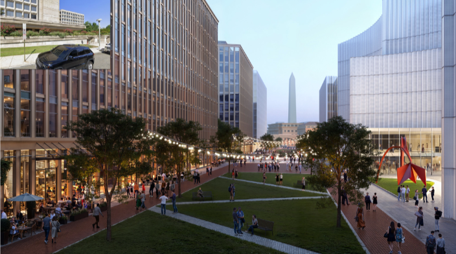
What Could Growth Downtown Look Like?
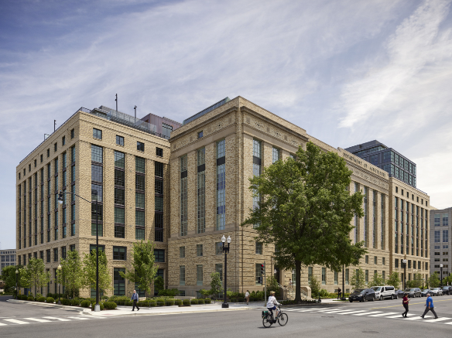
The federal government’s decision to dispose of several buildings with millions of square feet of space in the Southwest Federal Center presents an opportunity to transform a neighborhood that is almost entirely office space by adding thousands of housing units. Many federal buildings in this area are designated as historic landmarks, meaning their redevelopment will require adaptive reuse that preserves historically significant design.
Over the coming weeks, we’ll continue to share what we’ve learned from data, research, and conversations with residents and stakeholders about DC 2050 and how those lessons are shaping the blueprint for where and how the District can grow.
Visit DC2050.com and sign up for our newsletter to hear about opportunities to engage in the planning process.